
Peltier-based low-temperature stage design, vacuum thermal architecture optimisation and liquid-cooled heat rejection.
Overview
Development of a precision thermoelectric cooling stage for vacuum operation, designed to achieve temperatures down to approximately -50°C. The work combined Peltier module selection, thermal resistance-chain optimisation, conduction-path control and liquid-cooled heat rejection within a compact engineering system.
Engineering Challenge
Vacuum operation removes convective heat transfer, so the design relied on carefully controlled conduction paths, minimised parasitic heat loads and efficient heat removal from the hot side of the thermoelectric modules. The system also needed to remain practical to manufacture, assemble and integrate within the available product envelope.
Engineering Scope
- Developed the Peltier-based cooling-stage architecture for vacuum operation.
- Evaluated thermoelectric module operating point, heat load and achievable temperature differential.
- Optimised the thermal resistance chain between the cooled stage, thermoelectric modules and heat rejection plate.
- Designed a liquid-cooled heat rejection system for the hot side of the thermoelectric modules.
Thermoelectric Modelling
A thermoelectric calculation method was used to evaluate module operating point, heat load, thermal resistance chain and achievable temperature differential. The calculation image is intentionally anonymised and does not disclose detailed numerical inputs or proprietary design data.
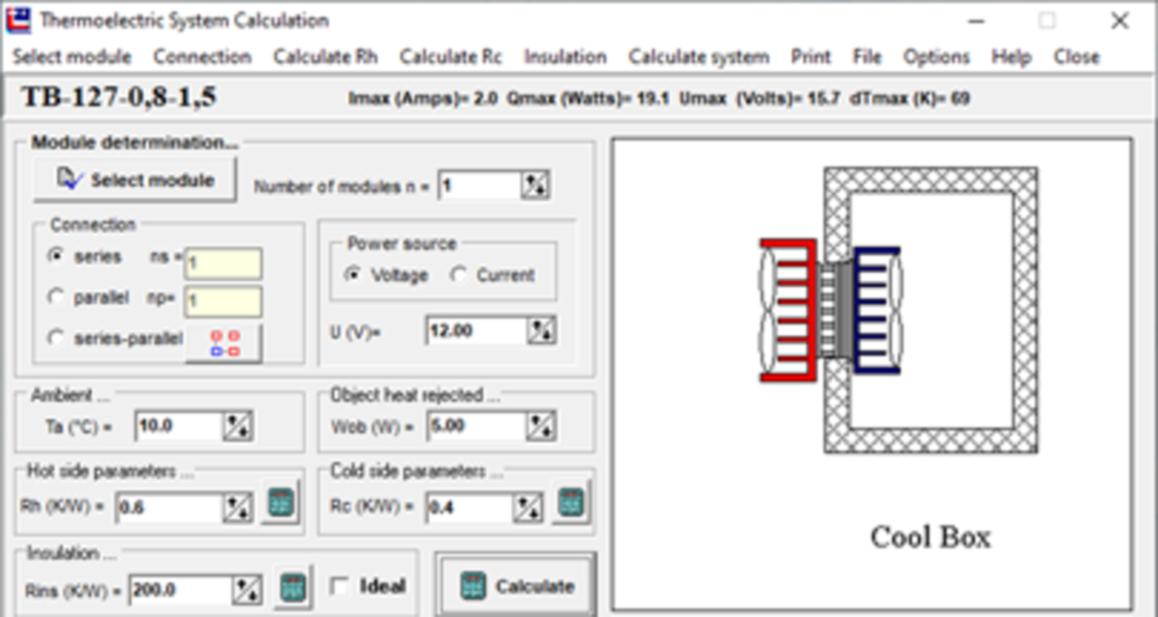
Thermoelectric system calculation used to support Peltier selection and operating point definition.
Heat Rejection Design
A liquid-cooled heat rejection plate was analysed to ensure sufficient heat removal from the hot side of the thermoelectric modules. The design focused on reducing thermal resistance while maintaining a manufacturable and compact heat-rejection architecture.
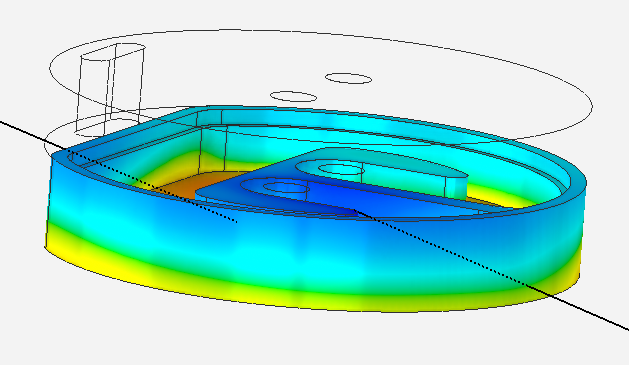
Thermal distribution within the liquid-cooled plate used to assess heat extraction performance.
Flow Optimisation
Flow analysis was used to assess coolant distribution through the heat rejection plate and identify regions that could affect local heat transfer performance. This supported refinement of the cooling architecture before physical implementation.
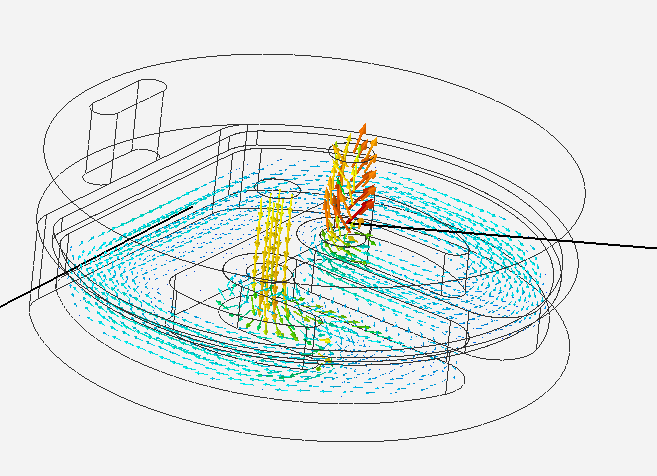
Flow field visualisation used to evaluate coolant distribution within the heat rejection plate.
Final System
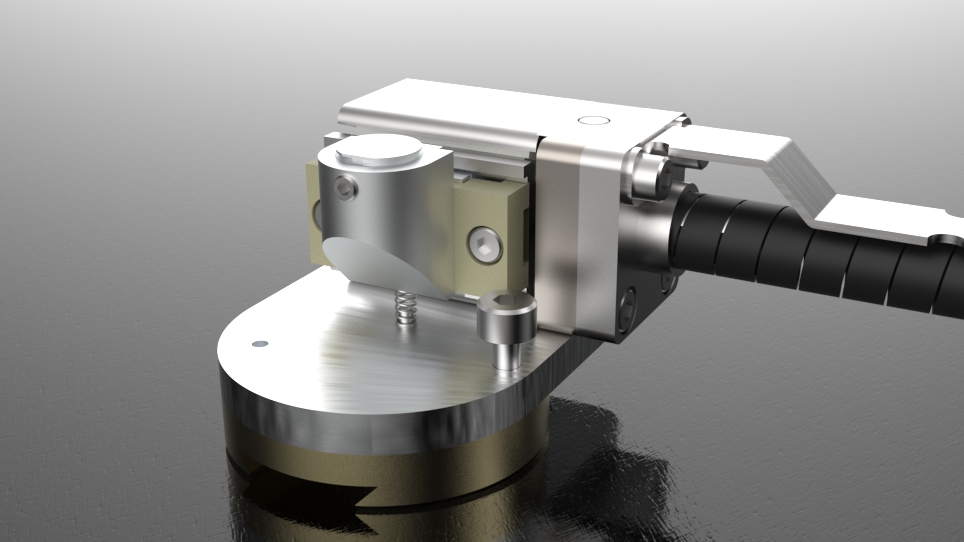
Physical implementation of the thermoelectric cooling stage system.
Results and Key Engineering Outcome
- Achieved the target low-temperature operating range under vacuum conditions.
- Reduced system complexity by optimising the thermoelectric architecture and moving from a three-module to a two-module solution.
- Improved efficiency by reducing the thermal resistance chain.
- Improved manufacturability and reduced component count.
- Balanced thermal performance with practical mechanical, manufacturing and integration constraints.
Confidentiality Note
This case study is intentionally described at a high level. No confidential dimensions, detailed calculation inputs, proprietary design data or client-specific internal documentation are disclosed.